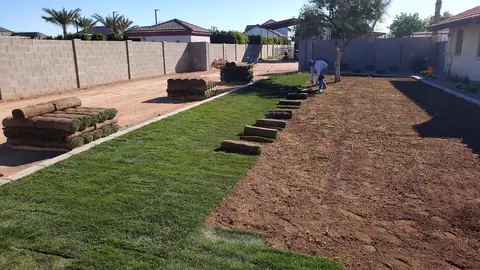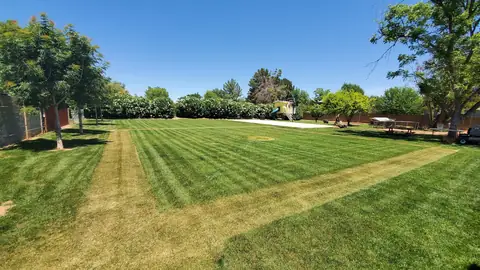
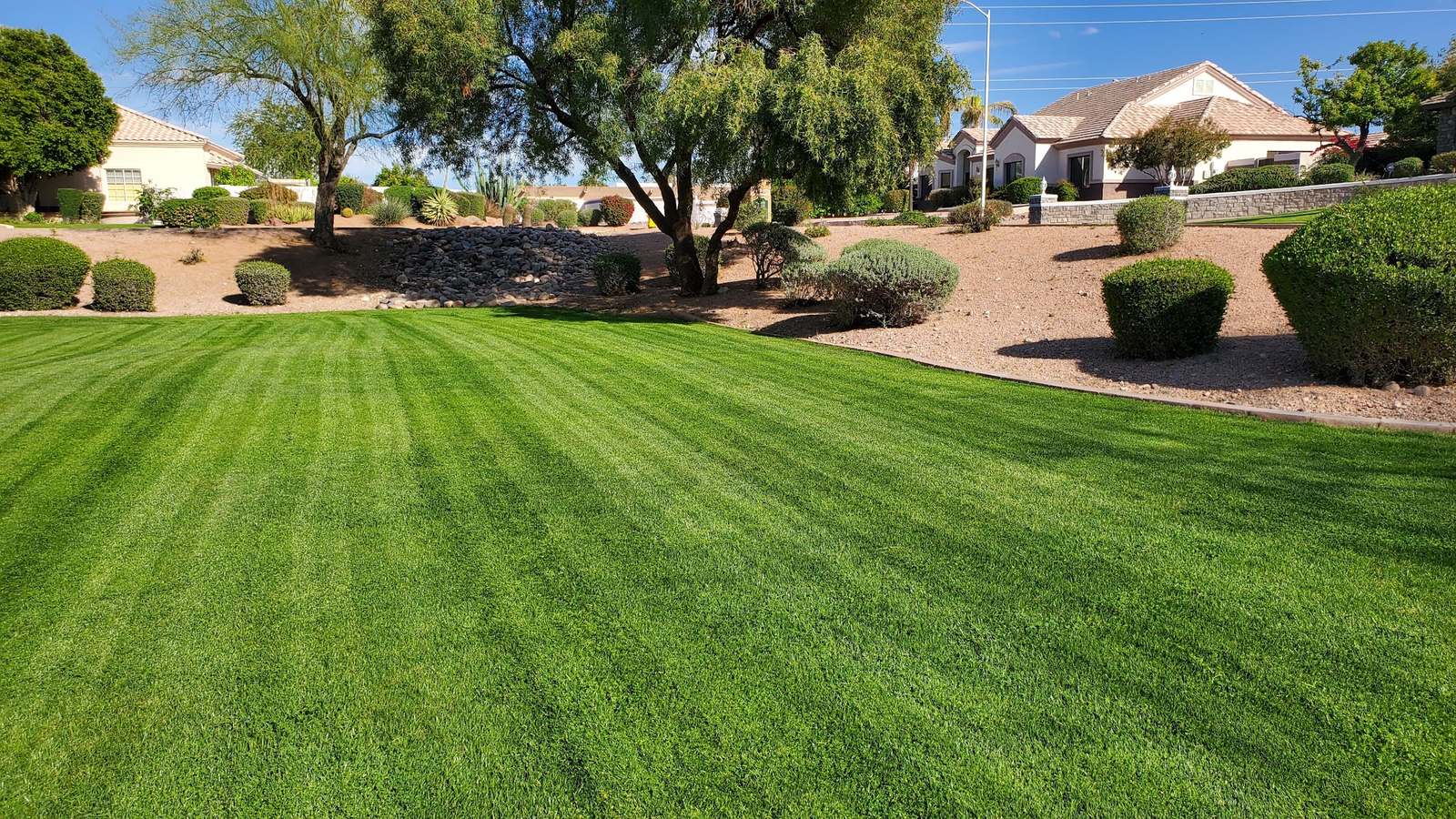
An Arizona summer is hard on grass, and on water bills. The good news is that a healthy Bermuda lawn doesn't need to be watered every day. It needs the right amount, at the right time, delivered evenly.
Water early in the morning
Set your timer to finish before the sun gets strong. Less water evaporates, wind is usually calm, and the grass dries off during the day instead of sitting wet overnight.
Deep and less often beats a little every day
Short daily watering keeps roots shallow, right where the soil heats up most. Watering longer, every few days, pushes roots deeper where the soil stays cooler. If water starts running off before it soaks in, split the run into two cycles with a break between them.
Check that it's enough
- Push a long screwdriver into the lawn after watering. It should slide in easily several inches deep.
- Walk across the grass. If your footprints stay pressed down, it's thirsty.
- Grass turning a dull, gray-green color is an early sign of drought stress.
Adjust with the season. Turn the timer down when the monsoon brings rain and again in fall. A schedule set in July wastes water in October.
Trees and shrubs need their own schedule
Trees and shrubs have deeper roots than grass, so they do best with longer, less frequent watering on a drip line. Keep them on a separate zone from the lawn so neither one gets the wrong amount.
Fix the leaks first
No schedule makes up for a broken head, a stuck valve or sprinklers aimed at the driveway. Brown patches next to green ones almost always mean a coverage problem, not too little water. A quick zone-by-zone check usually finds it.